
Beyond the well-known issues with palm oil and the frequent adulteration of extra-virgin olive oil, there exists yet another compelling reason to steer clear of these products in your kitchen. Palm oil stands as the predominant vegetable oil utilized globally in contemporary times. Whether you examine a boxed snack, a bagged treat, a bottled sauce, or a jarred spread, there’s a strong likelihood that palm oil features prominently in its ingredients list. This oil not only harbors the chief saturated fat responsible for elevating cholesterol levels-typically associated with animal products like meat and dairy-but it also raises substantial safety alarms due to the presence of a potentially hazardous chemical impurity called 3-monochloropropane-1,2-diol, commonly abbreviated as 3-MCPD. This substance emerges during the intense heat processing stages inherent to the refinement of vegetable oils, ultimately infiltrating a broad array of refined vegetable oils and fats, as well as numerous products derived from them, such as infant formulas.
Scientific investigations have confirmed the ubiquity of 3-MCPD across virtually all types of refined vegetable oils, though the concentrations vary markedly between different varieties. Among these, canola oil consistently exhibits the minimal concentrations of these harmful contaminants, while palm oil regrettably shows the most elevated levels. Drawing from comprehensive data analyses, experts suggest that such findings could translate into considerable human exposure, particularly in scenarios involving high-temperature applications like deep-frying salty snacks such as french fries. Remarkably, consuming merely five french fries prepared in such oils might exceed the tolerable daily intake threshold established by the European Food Safety Authority. For occasional indulgence in these treats, the risk remains negligible; however, habitual daily consumption could pose a genuine threat to one’s well-being.
The tolerable daily intake limit for 3-MCPD is calibrated according to body weight, which underscores particularly alarming exposure levels for infants reliant on formula rather than breast milk. Since infant formulas are formulated using refined vegetable oils, authorities like the European Food Safety Authority have flagged this as a potential health hazard. In the United States, projections indicate that infant exposure could be three to four times more severe than those limits, amplifying the urgency of the matter.
For babies not receiving breast milk, commercially produced infant formula represents the primary viable option, leaving little room for alternatives. Consequently, the vegetable oil sector bears a critical responsibility to innovate and diminish these contaminant levels in their products. This situation further reinforces the unparalleled superiority of breastfeeding whenever it proves feasible for mothers and infants alike.
Adults seeking to minimize their own exposure to 3-MCPD can take proactive steps by understanding the root cause: these compounds originate specifically during the refining procedures applied to oils. A logical strategy involves opting for unrefined oils instead. Comparative studies reveal that refined oils may contain up to 32 times higher concentrations of 3-MCPD than their unrefined equivalents. That said, one notable outlier exists in the form of toasted sesame oil. Although sesame oil qualifies as unrefined-produced simply by pressing sesame seeds-the use of pre-toasted seeds introduces the possibility that 3-MCPD forms naturally prior to processing.
Virgin oils, by their very definition, undergo no refinement whatsoever. They bypass the deodorization step, which constitutes the primary phase where most 3-MCPD generation occurs. This characteristic even serves as a reliable litmus test for distinguishing processing grades of olive oil. Should a product labeled as extra virgin olive oil test positive for MCPD, it unequivocally signals dilution with refined olive oil. The olive oil market’s vulnerability to fraud stems from multiple factors: the simplicity of blending in cheaper refined oils, the challenges in detecting such adulteration, powerful economic motivations, and insufficient regulatory oversight. But how pervasive is this issue within the industry?
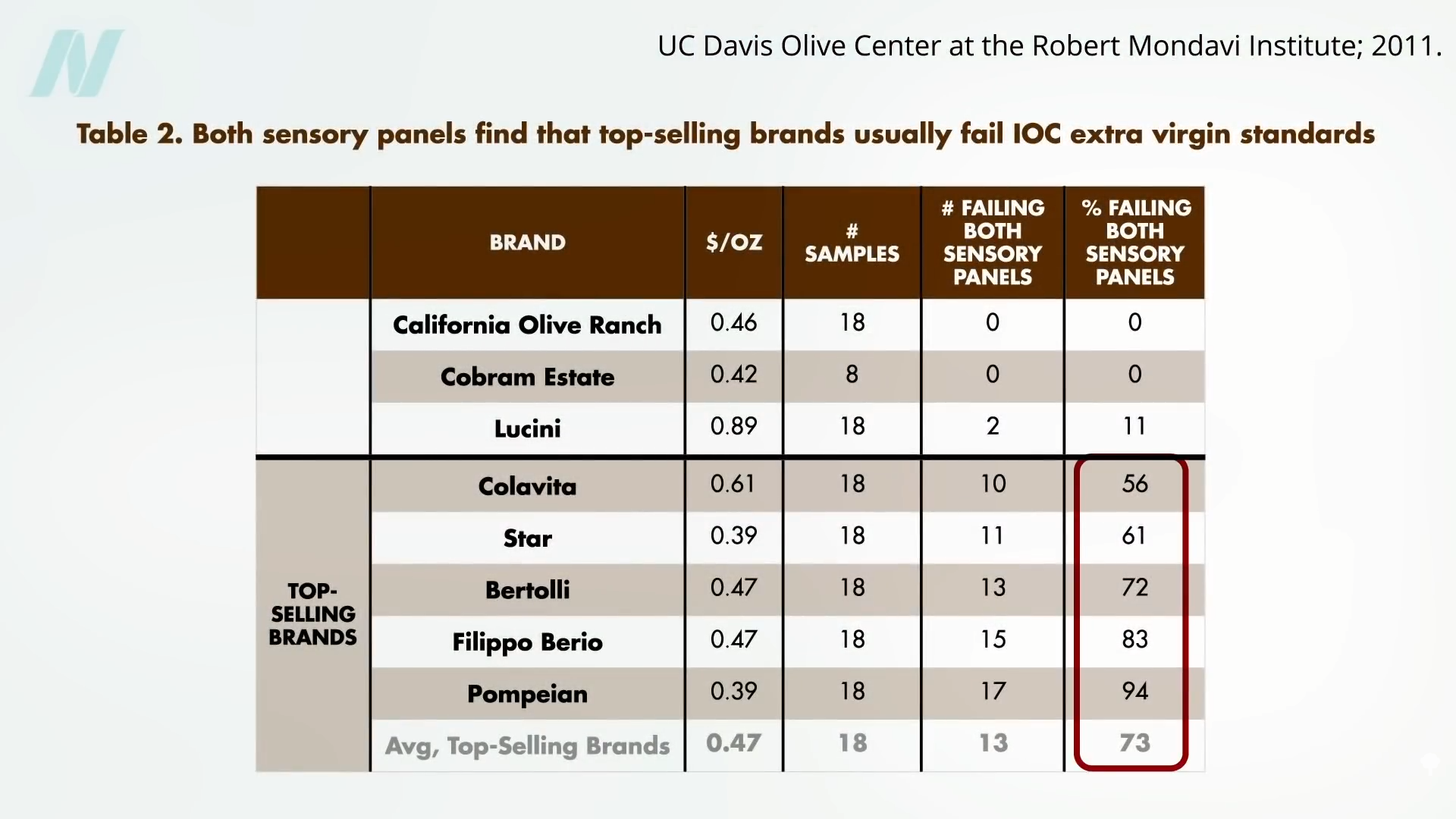
To gauge the extent of the problem, researchers conducted rigorous testing on 88 bottles marketed explicitly as extra virgin olive oil. Shockingly, only 33 of them proved authentic. Does brand popularity or import status from top-selling sources offer any safeguard? Unfortunately, even among leading imported brands, a staggering 73 percent of samples failed authenticity checks. In essence, just one in four samples passed muster, with no single brand achieving even a 50 percent success rate across its lineup-a stark reality illustrated clearly in visual data representations.
Key Takeaways
- Palm oil, recognized as the globe’s most prevalent vegetable oil, harbors the peak concentrations of the potentially dangerous 3-MCPD contaminant, with risks intensifying during deep-frying of processed items like french fries.
- Infants fed formula derived from refined oils could encounter three to four times the European Food Safety Authority’s tolerable daily intake of 3-MCPD, presenting a markedly elevated health risk relative to breastfed counterparts.
- Refined oils exhibit up to 32-fold higher 3-MCPD levels compared to unrefined varieties; genuine virgin oils, including true extra virgin olive oil, offer greater safety, yet the olive oil sector grapples extensively with fraudulent practices.
- Authenticity assessments showed only 33 out of 88 extra virgin olive oil bottles as fully legitimate, while 73 percent of top-selling imported brands fell short in purity evaluations.
This detailed examination into 3-MCPD contamination highlights the importance of scrutinizing cooking oil choices, particularly in light of refining processes that inadvertently foster these compounds. Palm oil’s dominance in processed foods amplifies everyday exposure risks, especially through common cooking methods like deep-frying. For vulnerable populations such as infants, the implications are profound, urging a reevaluation of formula production standards. Unrefined and virgin oils emerge as preferable alternatives, though consumers must navigate widespread adulteration in popular categories like extra virgin olive oil. Awareness of these dynamics empowers informed decisions, prioritizing health by selecting oils with minimal processing and verified purity. Ongoing industry efforts to mitigate contaminants remain essential, but in the interim, breastfeeding advocacy and vigilant label reading stand as practical safeguards.