In today’s diet culture, macro tracking has become a standard method for people looking to control their weight, build muscle, or optimize their nutrition. But is it really the best approach for long-term health? 🤔 Instead of obsessing over calories and macros, a more intuitive approach to eating is gaining traction: RPE-Eating (Rate of Perceived Effort Eating).
RPE-Eating focuses on building food trust and reconnecting with your body’s natural hunger cues, making it easier to maintain a healthy relationship with food. Here’s why you should consider ditching the scale and embracing a more mindful, balanced approach to eating.
What is RPE-Eating?
RPE-Eating is based on the Rate of Perceived Effort (RPE) scale used in exercise and physical activity. Instead of tracking the grams of protein, fats, and carbohydrates you eat, you tune in to how you feel during and after meals. This approach encourages you to eat based on hunger, satisfaction, and energy levels rather than external metrics.
The Benefits of RPE-Eating
Here are some key benefits of using RPE-Eating over macro tracking:
- Reduces stress: RPE-Eating takes the pressure off of calorie counting and allows you to focus on the experience of eating, which can reduce food-related anxiety.
- Improves body trust: Listening to your body helps you recognize hunger and fullness cues, promoting a healthier relationship with food.
- Encourages balance: Instead of focusing on what you can’t eat, RPE-Eating encourages flexibility and allows room for all foods, reducing feelings of deprivation.
How to Practice RPE-Eating
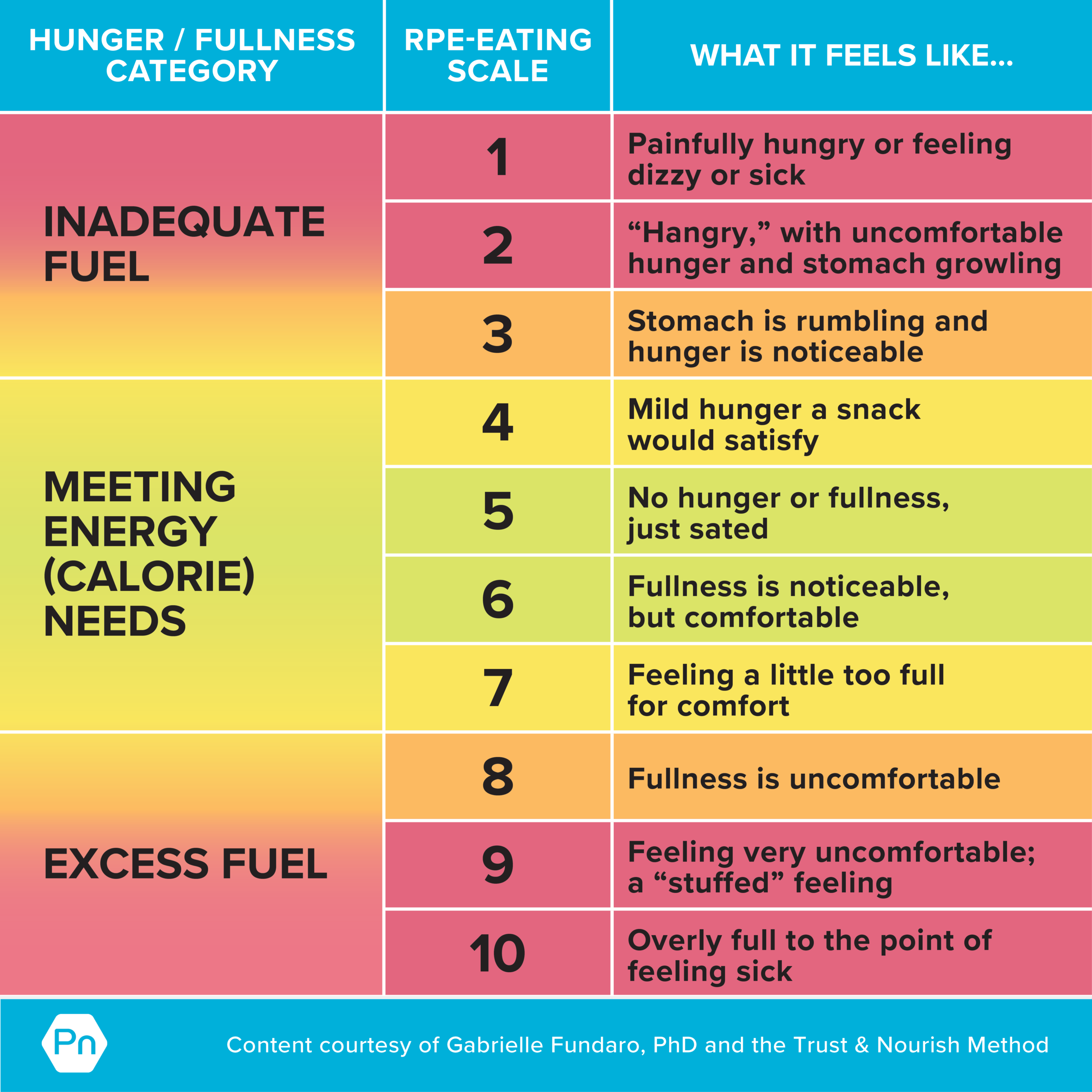
Practicing RPE-Eating is simple. Here’s a table that explains how to use the RPE scale to assess your eating experience:
| RPE Scale | What It Means for Eating |
|---|---|
| 0-2 | Very low hunger or satisfied; avoid overeating. |
| 3-4 | Slightly hungry; your body is asking for food, but you could wait. |
| 5-6 | Comfortably satisfied; you feel nourished and full but not stuffed. |
| 7-8 | Moderately full; stop eating before reaching a very full state. |
| 9-10 | Uncomfortably full; avoid this feeling as it can lead to bloating and discomfort. |
When you eat, consider your hunger and fullness on this scale and stop eating when you’re comfortably satisfied, not overly full. This helps prevent overeating and teaches your body to trust its natural signals.
Why RPE-Eating is Better Than Macro Tracking
Unlike macro tracking, which can create an unhealthy obsession with food, RPE-Eating fosters a sense of freedom and balance. Here’s why it might be the better approach:
- Intuitive eating: RPE-Eating encourages you to listen to your body, making eating a more mindful experience rather than a rigid calculation.
- Less anxiety: Without obsessing over macros and numbers, you can focus on the flavors, textures, and enjoyment of food.
- Promotes mental well-being: Allowing yourself flexibility and removing the “good vs. bad” food mentality reduces the emotional strain that often accompanies restrictive diets.
According to PubMed Central, adopting intuitive eating strategies like RPE can help improve overall mental and physical health by fostering a more positive attitude toward food and body image.
Final Thoughts: Build Food Trust
RPE-Eating is an effective approach for those who feel overwhelmed by constant macro tracking and calorie counting. By focusing on how food makes you feel, rather than measuring every bite, you can build a more trusting and healthy relationship with food.
If you’re ready to let go of rigid food rules and learn to eat intuitively, RPE-Eating may be the key to a balanced, nourishing lifestyle. 🌱
Learn More About Intuitive Eating:
Ready to embrace the freedom of RPE-Eating? Start listening to your body’s cues and build a more trusting relationship with food today!