“The wound is the place where the Light enters you.” ~Rumi
On that fateful day, July 2, 2009, my entire world crumbled with just three devastating words: “He is gone.”
At first, I mistakenly believed my friend was referring to my partner being away on a camping excursion somewhere. But the harsh reality soon hit me—she meant he was gone for good, departed from this life eternally.
A tight knot formed in my stomach, and my breathing came to an abrupt halt. My physical body instinctively responded to the overwhelming weight of this truth long before my mind could even begin to comprehend it fully. The person I cherished more deeply than my own existence never returned from that camping trip, and in profound ways, a significant part of me vanished alongside him.
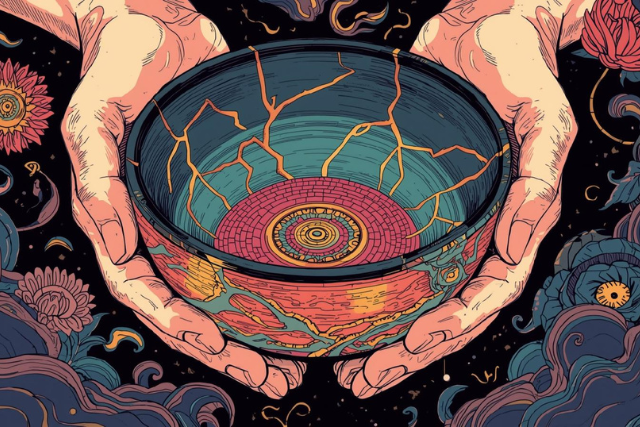
In an instant, my heart fractured into countless shards, and over the subsequent fifteen years, I have dedicated myself tirelessly to gathering those fragments, meticulously reassembling the pieces of my shattered heart.
I had immersed myself in studies of holistic medicine, psychology, and human services, naively convinced that this accumulated knowledge would serve as an impenetrable barrier against the ravages of trauma. Unfortunately, it offered no such protection. For those fifteen long years, I grappled with chronic post-traumatic stress disorder (PTSD), a condition far more intense and unrelenting than any academic text could have possibly prepared me for.
It was only when I discovered I was expecting my daughter that I summoned the determination to embark on a true path to recovery and wholeness. This was essential not just for my own sake, but so I could become the nurturing, present mother she deserved—something I had never experienced myself. Suddenly, I had a fresh, radiant light in my life, a powerful reason to battle onward.
Despite this newfound purpose, a persistent question echoed in the recesses of my thoughts: “Who might I have become if I had never endured that initial breakage?” Had the trauma already exacted too heavy a toll, rendering a fresh start impossible?
As I methodically reconstructed my existence, I frequently pondered the alternate version of myself that might have emerged without the shadow of that trauma. Observing other women in their twenties, I envied their seemingly unblemished futures stretching endlessly before them. Even though I was merely in my thirties, I felt irreparably delayed, as if my history had thrust me so far behind that recovery was out of reach, leaving me permanently marred.
How could I possibly extend a helping hand to anyone else when I remained ensnared by my unresolved grief, still wrestling with waves of anxiety and depression, and continuing to navigate the persistent ache of a fractured heart? Deep within, the pain lingered—how could I guide others through their darkness while mine still clouded my vision?
It required time and introspection, but eventually, I came to a liberating realization: offering help and serving others demands neither flawless perfection, unbridled constant joy, nor an unscarred history. What it truly calls for is the bravery to show up authentically in every fleeting moment, embracing the truth that our inherent worth endures even amid feelings of brokenness.
Beneath the piles of neglected tasks on endless to-do lists, the baskets of unfolded laundry, the disarray in my vehicle, the unwelcome bank overdraft notices, and the creased attire hanging in my closet, my intrinsic value persisted undiminished. I unlocked that value by granting myself permission to embrace vulnerability, by revealing the unrefined facets of my being—those uncertain, answerless parts mired in bewilderment yet clinging steadfastly to hope in the ongoing journey toward healing.
I started to contemplate whether my so-called flaws and hardships were not mere deviations from the route, but integral elements of the journey itself. Could those obstacles I once viewed as insurmountable barriers actually represent vital teachings tailored precisely for my unique path and greater destiny?
Without the profound loss, the ensuing trauma, and the grueling struggles that followed, would I have ever committed to such deep inner exploration and personal growth? At this juncture in my evolution, such hypotheticals matter little. Having traversed to the far side of this restorative process, I now recognize that regardless of life’s inevitable trials, it is our response to them that ultimately shapes our trajectory.
In the absence of a deliberate cause to strive for and cultivate, I had unwittingly permitted an internal stagnation, a slow erosion born of neglected growth and unaddressed healing. For an extended period, I existed in a state of emotional lockdown, overwhelmed by the sheer scale of the upheavals life had thrust upon me.
Through intentional practices like somatic breathwork, therapeutic bodywork, restorative yoga, and time-honored Ayurvedic healing modalities, I discovered methods to tenderly care for and integrate those fragile, wounded aspects of myself. What were once perpetual wellsprings of unease, embarrassment, and concealed suffering evolved into profound reservoirs of resilience, insight, and genuine empathy. Gradually, my suffering ceased to be a burdensome load I merely hauled around; instead, it became a raw material I could alchemize into something empowering.
I used to interpret “he is gone” as a death knell for my own existence as well. Today, I understand that experiences of loss, the visible scars they leave, and the battles we wage do not diminish our worth—they illuminate it. What truly counts is not the elements that depart from our lives, but the empowering choices we make to ascend with whatever endures.
My life was irrevocably altered that day, and the preconceived notions of how things “should” unfold or who I “should” become dissolved into irrelevance. Yet, I have cultivated the ability to engage with each encounter mindfully—extracting the lessons that nourish me while consciously letting go of what hinders my progress.
For years, I was convinced that my emotional scars disqualified me from supporting others. Now, I perceive them as the exact qualifications that enable me to do so effectively. Our value does not evaporate amid the agonies that leave us feeling fractured; rather, it amplifies when we summon the resolve to press forward amid chaos and uncertainty.
Reflect on this: Are you concealing your scars, or are you permitting them to illuminate the path for another soul? The very struggles you keep hidden might be the bridge that allows someone else to feel truly understood, empowering them to transcend their own concealed suffering.