
Throughout my career in the National Health Service (NHS), I have encountered numerous misguided efforts by hospital administrations to express appreciation for their dedicated employees. These attempts often fall disappointingly flat, exacerbating frustrations rather than alleviating them. For example, one local trust distributed packets of seeds to symbolize a “new beginning” following the pandemic. As a colleague astutely observed, this gesture felt utterly pointless and even painful, especially since she was already overwhelmed, handling the workload of three individuals after her department struggled to fill vacancies left by mass resignations. Similarly, another trust mailed out a solitary teabag to each staff member—a stingy move laden with irony, given that ward policies frequently prohibit self-service hot beverages. Such initiatives from the NHS have a knack for deepening the sense of burnout among its exhausted workforce, even when the intention is to uplift spirits. It is, in many ways, a remarkable feat of counterproductive morale management.
Yet, amid these misfires, there occasionally emerges an attempt at staff appreciation so absurd, so outrageously off-target, that it leaves observers utterly stunned and seething with disbelief.
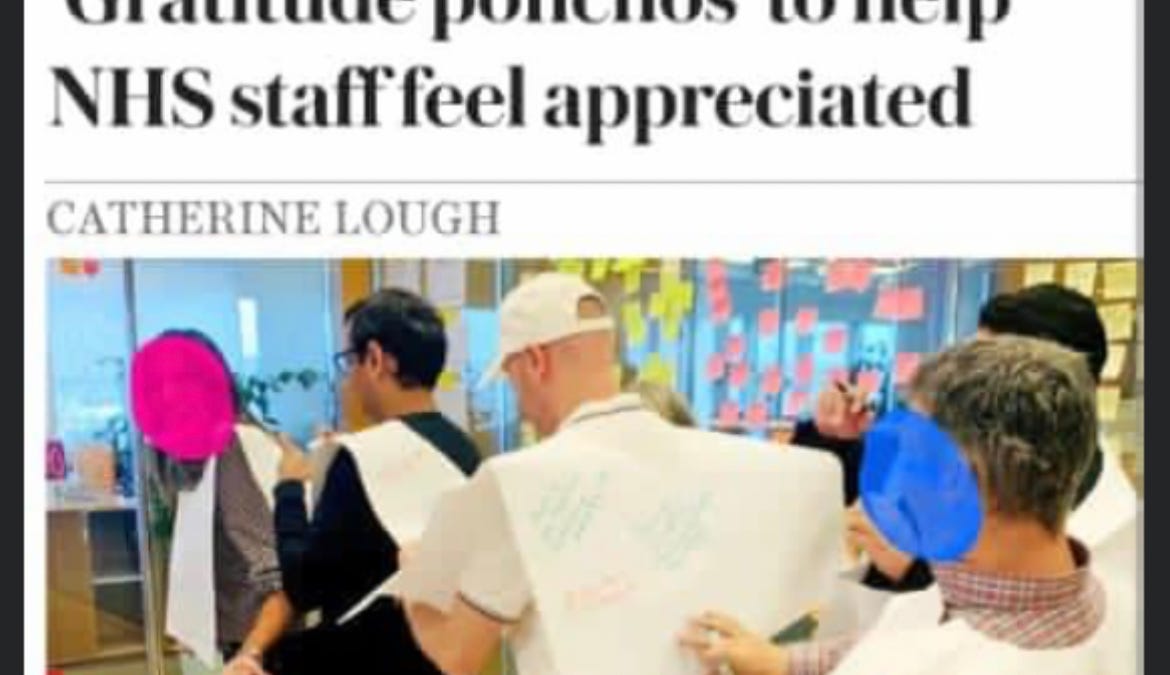
Allow me to introduce what has become known as the NHS Gratitude Poncho.
This so-called poncho bears a striking resemblance to a sheet of flipchart paper with a crude hole cut out for the head—clearly, no genuine ponchos were involved in this exercise, likely due to the perennial budget constraints that plague the NHS across all fronts, from patient care to fair staff compensation. The concept is simple: employees slip their head through the opening, and then their tired coworkers scribble complimentary messages onto the paper. For those who have incredulously asked if this is some elaborate prank, the unfortunate answer is no—it appears to be entirely serious.
Let us be clear: there is absolutely nothing inherently wrong with gratitude or its expression. On the contrary, a substantial body of scientific research demonstrates its profound benefits for mental well-being. Practicing gratitude helps rewire the brain, shifting focus from a pervasive negativity bias toward a more positive outlook. I myself approached gratitude exercises with considerable skepticism when my therapist first recommended them, but I must concede that I was mistaken. Regular practitioners of gratitude not only experience enhanced emotional and mental health; they also tend to engage in more physical activity and require fewer medical consultations—a truly remarkable outcome. What’s more, the positive effects extend contagiously: simply witnessing others express gratitude can uplift our own mood, without us needing to participate directly. In an ideal world, gratitude would be as routinely prescribed as medication, given its potent impact.
So, what precisely renders these gratitude ponchos such a spectacular failure? The core issue lies in their blatant disregard for the glaring problems staring everyone in the face. Encouraging gratitude among staff cannot stand alone as a superficial fix; it must be paired with tangible improvements to their professional lives, not serve as a substitute for them. If the goal is truly to enhance the well-being of NHS workers, then prioritize comprehensive staffing schedules that avoid chronic shortages. Fully equip clinical departments with necessary resources. Aggressively reduce patient waiting times. Upgrade the physical infrastructure of workplaces. Reinstate bursaries for nursing students. Deliver complete pay restorations for physicians. Facilitate access to annual leave and study leave without bureaucratic battles. Do not subject employees to the indignity of draping themselves in substandard paper and pretending it constitutes meaningful support—that is nothing short of humiliating.
Perhaps the most disheartening aspect of this fiasco is that medicine, at its heart, remains a profoundly rewarding and purposeful vocation. It is an immense privilege to serve in healthcare. Public thanks are rare in our field, but when they do come, even small gestures—a kind word or positive feedback—can profoundly boost our spirits. Healthcare professionals are often touchingly receptive to such affirmations, revealing how little it truly takes to foster morale. Tragically, it seems equally effortless to squander that opportunity through tone-deaf initiatives.
A Practical Suggestion for Exhausted Healthcare Workers: If you are feeling drained in your role, consider reaching out today to compliment a colleague. Drop an email to their supervisor, submit a “greatix” recognition form, or send a quick WhatsApp note. Voicing your appreciation will genuinely benefit both you and the recipient, fostering a cycle of positivity. For maximum impact, make this a consistent habit—no ponchos necessary.