
Why do healthy lifestyle decisions have the potential to eliminate up to 90 percent of our heart attack risk, whereas medications typically offer only a 20 to 30 percent reduction in that risk?
In the context of a typical Western diet, the process of atherosclerosis—commonly referred to as the hardening of the arteries and recognized as the leading cause of death for both men and women—begins during the teenage years. Researchers examined approximately 3,000 coronary arteries and aortas, which is the body’s primary artery, obtained from individuals aged 15 to 34 who had died in accidents, homicides, or suicides. Their findings revealed that fatty streaks within the arteries can start developing in adolescence, evolving into full-blown atherosclerotic plaques by the 20s, and then intensifying further during the 30s, potentially leading to fatal outcomes. When this condition affects the heart, it can trigger a heart attack; in the brain, it may result in a stroke. The graphic below illustrates this progression, which is also highlighted at the 0:35 mark in the associated video discussion on cholesterol levels.
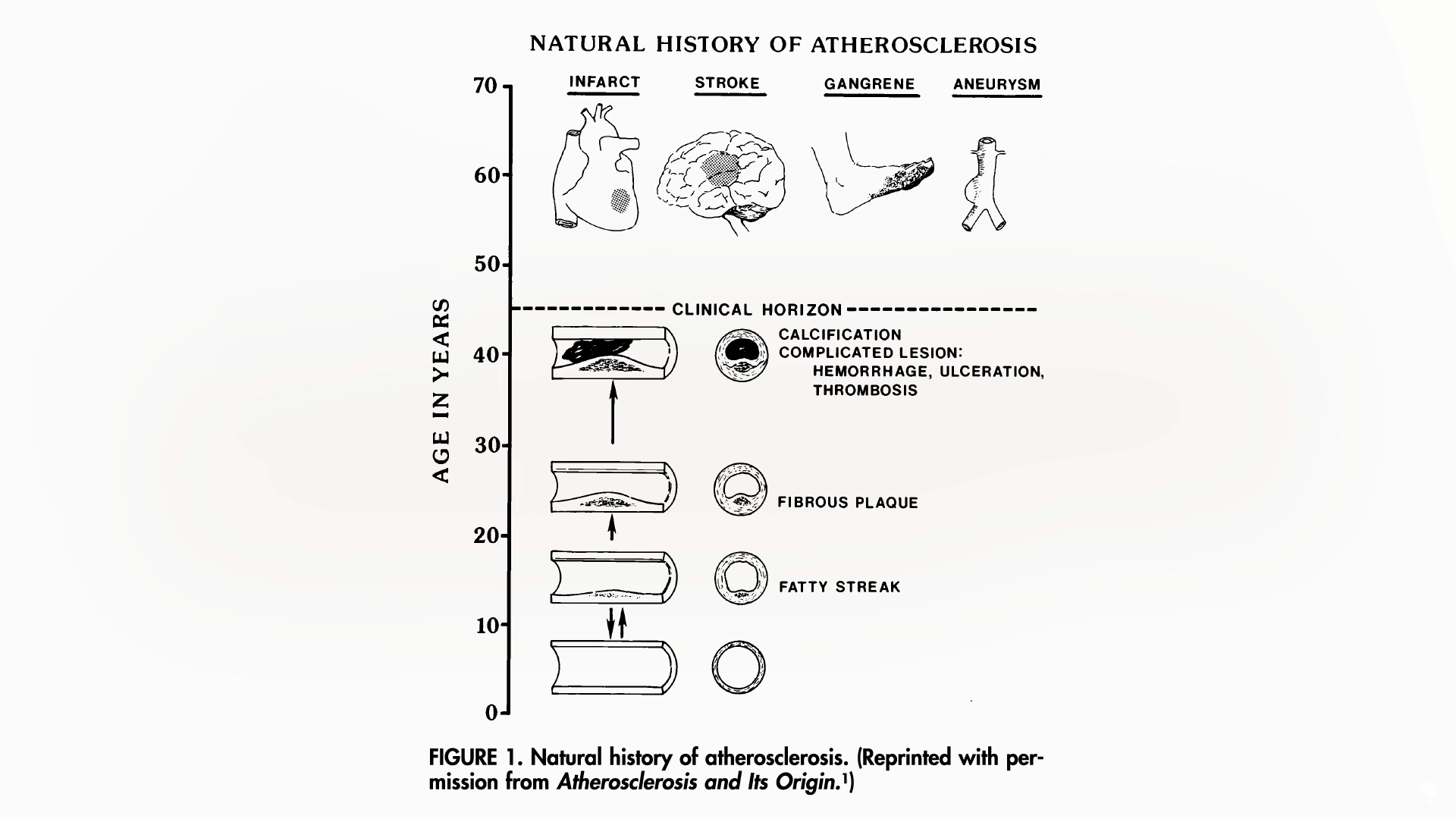
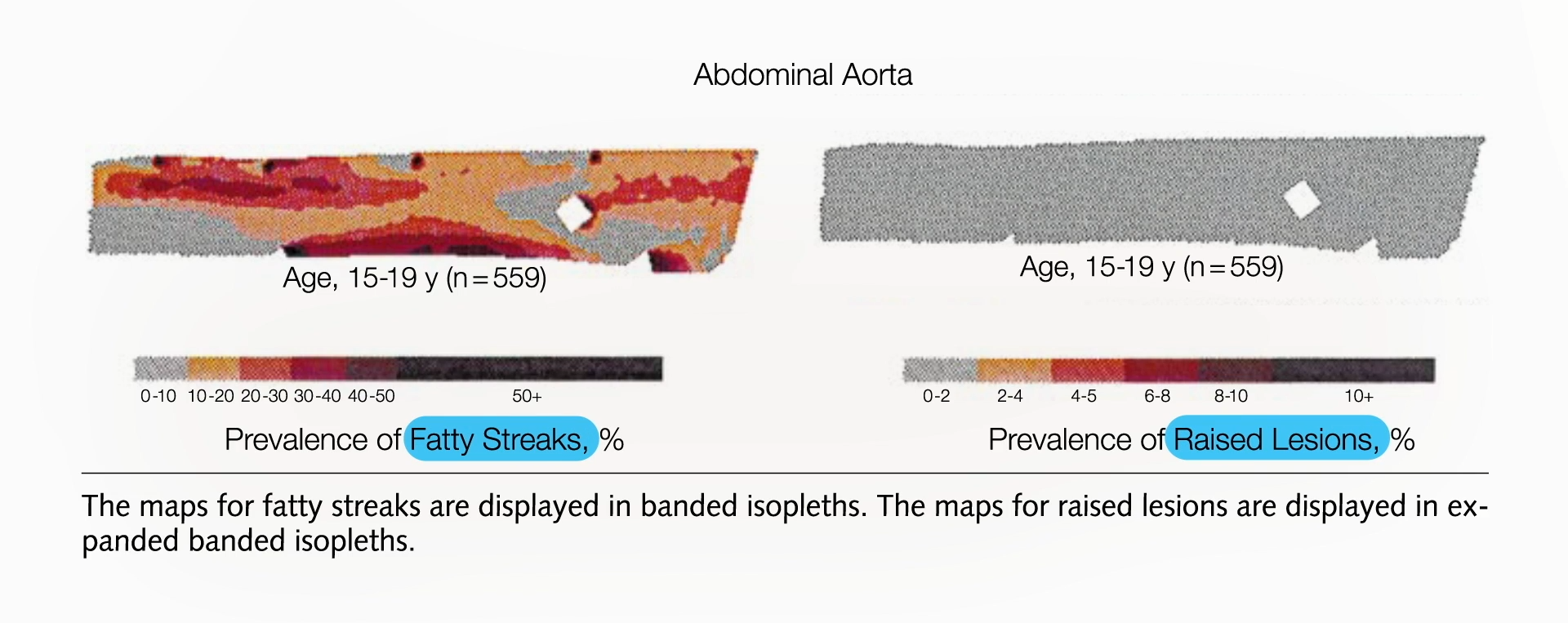
How prevalent is this issue among young people? Every single teenager in the study—representing 100 percent of the participants—already showed evidence of fatty streaks accumulating inside their arteries. By the time they reached their early 30s, the majority had seen these streaks develop into raised atherosclerotic plaques that protruded into the arterial walls. For those between 15 and 19 years old, fatty streaks were widespread in their aortas, though plaques had not yet formed on average, as depicted in the image below and discussed at 1:15 in the video.
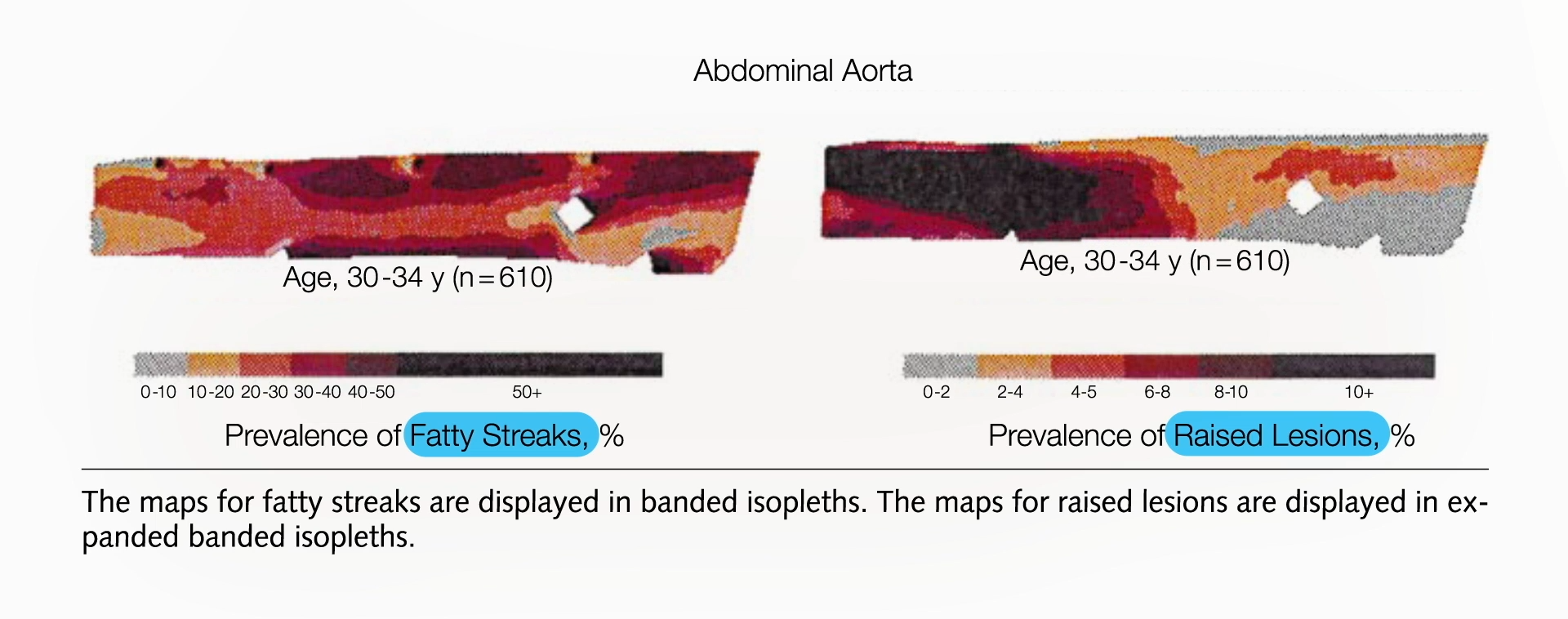
These plaques began emerging in the abdominal aorta during the early 20s and continued to advance through the late 20s, at which point fatty streaks had spread extensively. Entering their early 30s, the state of their arteries had deteriorated significantly, as shown in the illustration below and covered at 1:25 in the video.
However, this examination focused on the abdominal aorta, the central artery that travels through the torso and branches into the legs. What about the coronary arteries that supply blood directly to the heart muscle?
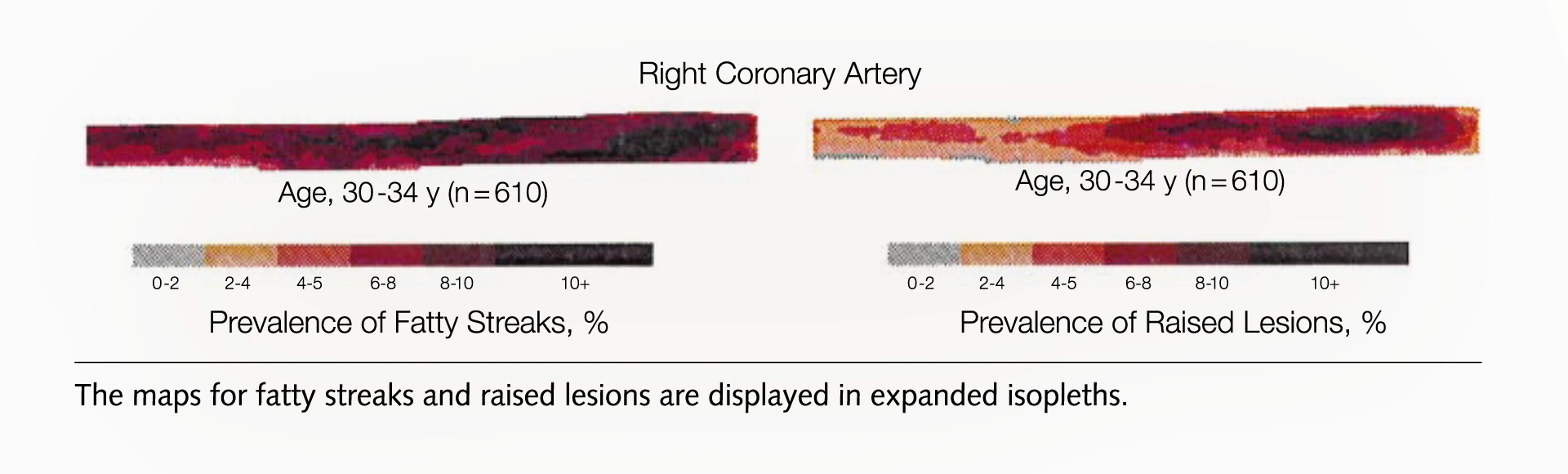
Studies have identified a similar trajectory in the coronary arteries: fatty streaks appearing in the teenage years, initial plaque formation in the early 20s that advances over time, and by early 30s, the majority of individuals already exhibiting plaques in these critical vessels, as illustrated below and explained at 1:47 in the video.
The onset of atherosclerosis occurs as early as the adolescent period. This early development underscores the importance of intervention before symptoms manifest. We cannot afford to delay treatment until heart disease becomes clinically evident. Since the process initiates in youth, preventive strategies should commence at that stage. Consider an analogy: if you discovered a malignant tumor, you would not postpone treatment until it reached a particular size. Similarly, with diabetes, you would not wait for vision loss to take action. So, what is the most effective way to address atherosclerosis? The key lies in reducing LDL cholesterol levels through a dietary approach that minimizes saturated fats and dietary cholesterol—specifically, a eating pattern low in animal products like eggs, meat, dairy, and processed junk foods.
To effectively curb this widespread health crisis, we must implement substantial lifestyle modifications starting from infancy or early childhood. Some might view such changes as extreme, but in reality, prioritizing wholesome nutrition should not be considered radical. While it demands commitment to alter long-standing habits, atherosclerosis remains the top killer globally. We have successfully tackled smoking, dramatically cutting rates and consequently reducing lung cancer incidence. Moreover, adopting a healthy diet, including fully plant-based options, is not only safe but endorsed by leading authorities. The Academy of Nutrition and Dietetics, the world’s largest and most established organization of nutrition experts, affirms that plant-based diets are suitable across all life stages, from pregnancy onward.
A landmark study in the Journal of the American College of Cardiology boldly states that curing atherosclerosis ought to become the primary focus of cardiovascular prevention efforts. What supports the idea that maintaining low LDL levels throughout life can achieve this? Certain individuals inherit a genetic mutation in the PCSK9 gene, affecting about 1 in 50 African Americans, which naturally keeps their LDL cholesterol roughly 40 percent lower from birth. These fortunate people experience an 88 percent reduction in coronary heart disease risk compared to others, even amid other adverse factors like high blood pressure, obesity, smoking, and diabetes. This demonstrates the profound protective effect of lifelong low LDL, overriding multiple risk factors.
This substantial 88 percent decrease in serious events such as heart attacks or sudden cardiac death was observed at an average LDL of 100 mg/dL, versus 138 mg/dL in those without the mutation. It proves that sustaining LDL below 100 mg/dL is feasible and beneficial. Why does a 40 mg/dL LDL reduction from this genetic advantage slash heart disease risk by nearly 90 percent, while statins achieve only about 20 percent? The critical factor is the duration of exposure to lower levels. For LDL cholesterol management, both the degree of reduction and the length of time it is maintained matter immensely.
Consequently, comprehensive healthy lifestyle practices can potentially eradicate around 90 percent of heart attack risk, far surpassing the 20 to 30 percent from pharmacological interventions. Starting treatment later in life with drugs might require driving LDL under 70 mg/dL to slow atherosclerosis progression. Yet, initiating healthier habits earlier could suffice with LDL around 100 mg/dL, a target attainable for most through diet. This aligns with international data showing heart disease mortality stabilizes at population LDL averages near 100 mg/dL, as charted below and detailed at 5:21 in the video.
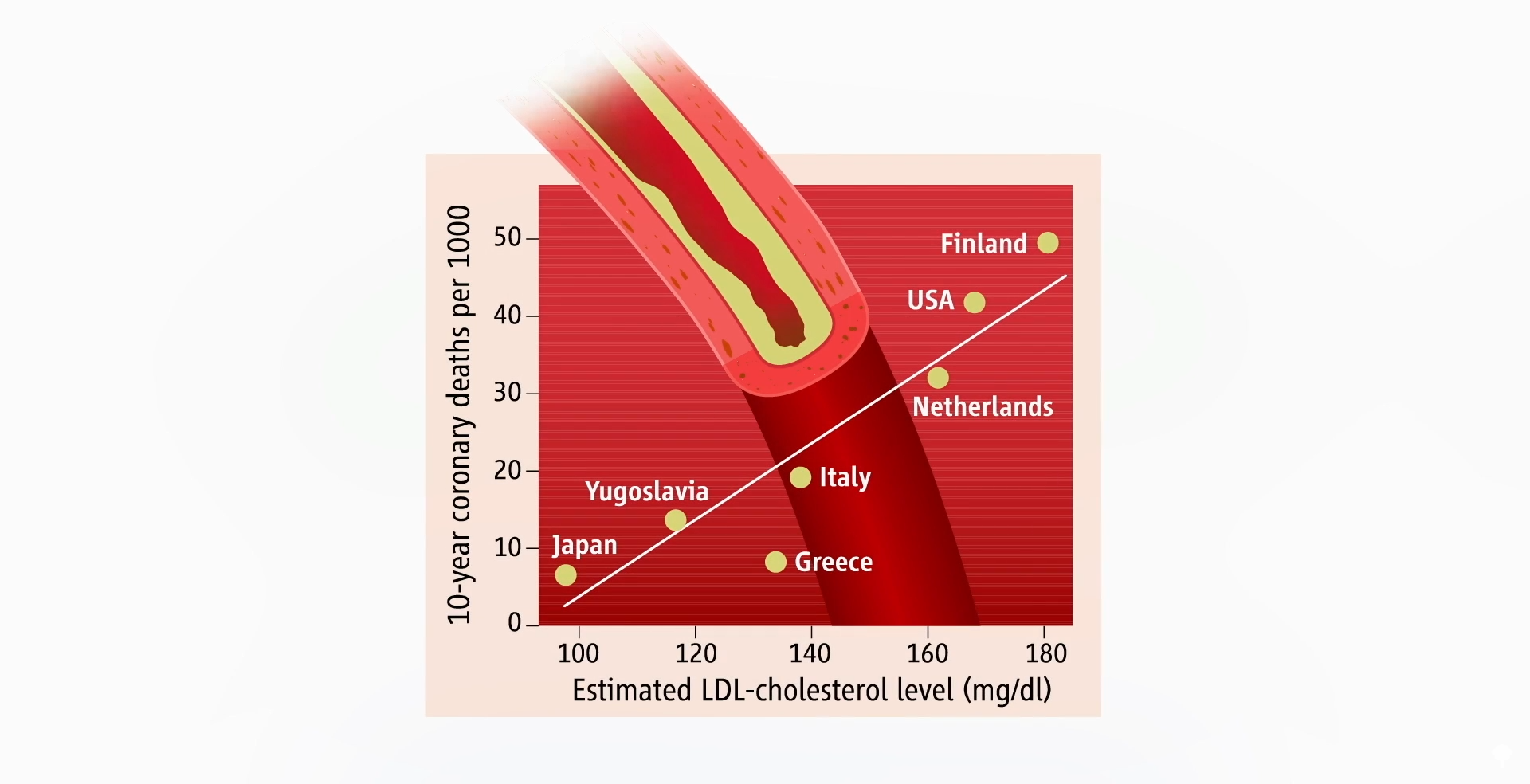
Achieving this protection hinges on lifelong LDL control. For those using medications later to arrest disease advancement, LDL below 70 mg/dL may be necessary. Attempting to reverse decades of poor dietary choices with drugs might demand LDL as low as 55 mg/dL to eliminate coronary events entirely. In cases post-heart attack, aiming for around 30 mg/dL could be ideal to prevent recurrence, as it not only prevents new plaques but also stabilizes existing ones, reducing rupture risk.
Is it safe to maintain such low cholesterol levels? Can LDL ever become excessively low? These questions warrant further exploration.
Key Takeaways
- Atherosclerosis, or arterial hardening, initiates early in life, with fatty streaks often emerging in the teens and maturing into plaques by the 20s and 30s. This timeline emphasizes the need for proactive prevention well ahead of any symptoms.
- Adopting healthy lifestyles, particularly diets low in saturated fat and cholesterol, can diminish heart attack risk by as much as 90 percent, outpacing statins’ 20-30 percent effect. The advantage stems from early, sustained LDL reduction.
- Individuals with innate low LDL from genetic variations like PCSK9 mutations exhibit markedly reduced heart disease rates despite other risks, underscoring the value of lifelong dietary prevention starting young.